
Dark spots on a wall or a musty odor in the basement can trigger real concern. You grab a kit off the store shelf and wonder: do home mold tests work? The short answer is yes, but only in a narrow way. These products confirm that spores exist in your living space, yet they rarely tell you what species you’re dealing with, how severe the contamination is, or where moisture is feeding the problem. Before you trust a petri dish with your family’s health, it pays to understand the limits.
What Is a DIY Screening Kit?
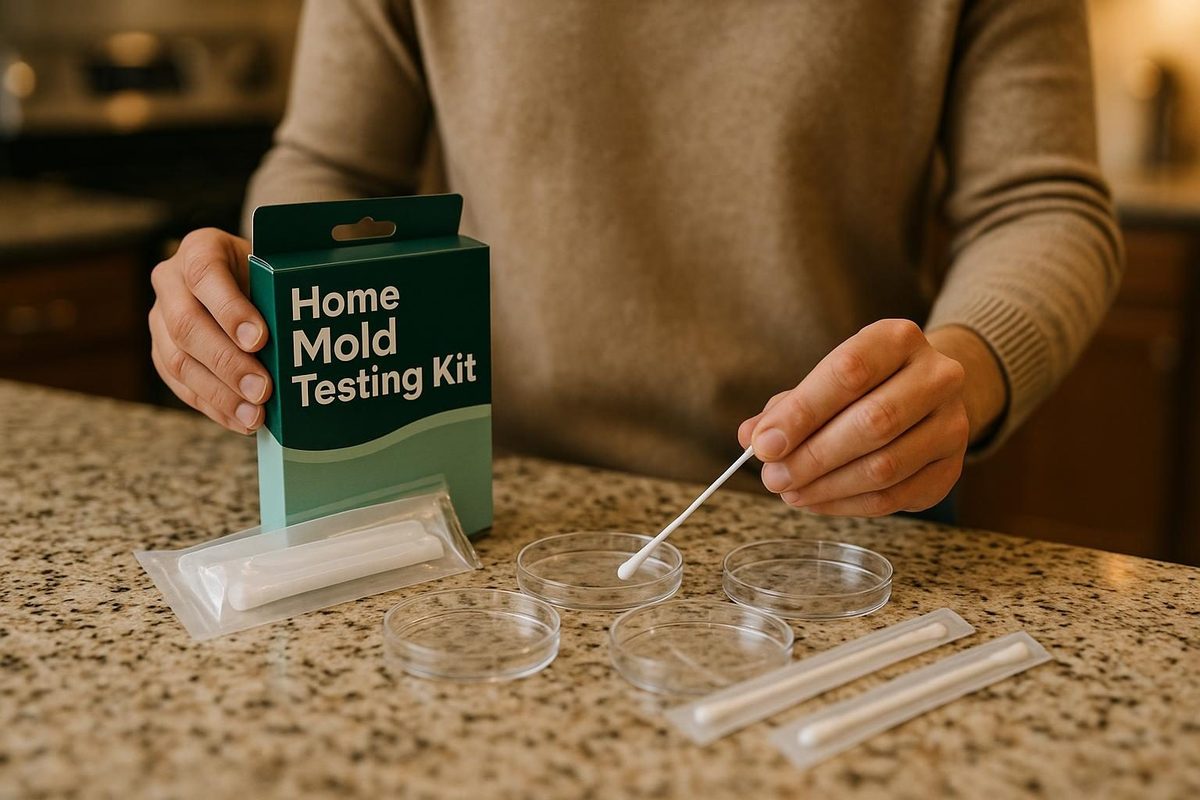
A screening kit lets you collect air or surface samples and check for fungal growth in your house. Most products ship with petri dishes, swabs, or adhesive strips. Some include prepaid mailers so a laboratory can identify the species; others give you instructions to read results at the kitchen counter.
Three common formats dominate the consumer market:
1. Air Sampling
Airborne particulates settle onto an open plate left in a room for a set number of hours. If organisms are present, colonies grow within 48 to 72 hours. The catch? Every indoor environment contains some level of floating particulates, so growth on the plate does not automatically signal a problem.
2. Surface Swabs
You press a swab or tape strip against a suspicious area, then either let the sample incubate at room temperature or ship it to a lab for analysis. This approach targets visible discoloration but won’t detect hidden contamination behind drywall or under flooring.
3. Dust Collection
Newer products let you gather settled dust from vents, baseboards, or furniture. A laboratory analyzes the particles and returns a spore count. Dust sampling can reveal contamination in spaces where you don’t see obvious signs, though accuracy depends on sample handling.
Do These Kits Actually Give Reliable Results?
DIY kits detect fungal presence, but “detection” and “diagnosis” are two very different things. Spores exist everywhere, indoors and outdoors. A positive result on a petri dish simply confirms what science already knows: your air carries microscopic organisms. The real question is whether concentrations are high enough to affect indoor air quality or trigger health symptoms.
Where Consumer Kits Fall Short
- They cannot measure spore concentration with precision
- They rarely identify specific species (like Stachybotrys, the fungus often called “black” variety) without a lab add-on
- They miss hidden contamination behind walls, ceilings, and crawl spaces
- They offer no data on moisture sources driving the problem
- False positives are common because of handling errors, open windows during sampling, or high ambient humidity
In my experience reviewing dozens of reports, consumer kits confirm what most people already suspect. They don’t, however, tell you how to fix it or how serious the situation really is.
When a Store-Bought Kit Makes Sense
Even with their limits, off-the-shelf products still serve a purpose in certain situations. If you smell something musty but aren’t sure whether it’s fungal or just old carpet, a quick screening can point you in the right direction.
A DIY approach works when:
- You suspect contamination in a specific room and want basic confirmation
- You need preliminary evidence before calling a qualified inspector
- You want to compare conditions in different areas throughout the house
- You need something to show a landlord or property manager before they’ll act
These products are less useful when you’re trying to gauge the severity of an issue or evaluate potential health risks like mycotoxin exposure or respiratory irritation.
What Consumer Products Typically Miss
Store-bought options cannot replicate what a trained professional does on-site. They lack the instruments, calibration, and field experience needed for a full assessment.
Gaps in DIY Approaches
- No comprehensive contamination assessment
- No moisture detection (the root cause in nearly every case)
- No measurement of indoor concentration levels
- No identification of the source feeding fungal growth
- No remediation guidance
Finding spores on a swab is a starting point. It is not a solution.
Professional Inspection vs. Store-Bought Options
A certified inspector uses calibrated air pumps, surface cassettes, moisture meters, and infrared cameras to pinpoint where contamination exists and why it started. That combination of tools tells a story no consumer product can match.
Professional environmental assessment may also cover lead or asbestos screening if building materials are old or visibly deteriorating.
What Professionals Deliver
- Species identification (critical for gauging health risk)
- Detection of hidden contamination using thermal imaging and pin-type meters
- Root-cause analysis tied to moisture intrusion
- Written reports with lab-confirmed data
- Clear remediation recommendations
A professional evaluation shows the full picture. Consumer kits show one pixel.
When to Hire a Professional
Hire a certified inspector when:
- You experience allergy or respiratory symptoms that worsen indoors
- You detect a persistent odor but cannot locate the source
- Visible fungal growth covers more than 10 square feet
- You suspect hidden contamination behind walls, under floors, or in crawl spaces
- You need documentation for a real estate transaction, insurance claim, or legal dispute
One mistake I see repeatedly: homeowners spend $40 on three different store kits, get inconclusive results from each, then pay $400 for an inspection anyway. Skipping straight to the professional route often saves both time and money.
What to Do After a Positive Result
A positive reading does not mean your house is unsafe. First, check for visible moisture, leaks, or water damage near the area you sampled. Dry out damp surfaces and clean any visible growth with proper safety equipment (N95 respirator, gloves, eye protection).
Surface cleanup alone rarely solves the underlying issue. If the moisture source is still active, regrowth is almost guaranteed. A remediation company can locate the origin, remove compromised material, and set up containment so particles don’t spread to clean areas during the process.
Prevention: Stopping Fungal Growth Before It Starts
Controlling moisture is the single most effective prevention strategy. Every species of fungus needs water to colonize a surface, so cutting off that supply stops the problem at its root.
Practical Prevention Steps
- Run exhaust fans in kitchens and bathrooms during and after use
- Keep indoor humidity below 50% with a dehumidifier in damp areas
- Repair plumbing leaks within 24 to 48 hours
- Clean gutters and ensure grading directs water away from the foundation
- Use a HEPA filter in your HVAC system to reduce circulating particulate counts
- Avoid overwatering indoor plants, especially in low-ventilation rooms
- Schedule annual HVAC maintenance
Consistent upkeep beats reactive cleanup every time.
Frequently Asked Questions
Are at-home screening kits accurate?
They detect spore presence reliably, but they can’t measure concentration or identify species without a lab add-on. Accuracy depends heavily on proper sample handling and environmental conditions during collection.
What are signs of exposure-related sickness?
Common symptoms include nasal congestion, coughing, eye irritation, skin rashes, and worsening asthma. Prolonged exposure in sensitive individuals, especially children, can lead to more serious respiratory conditions.
Is a professional inspection worth the cost?
Yes, especially if you suspect hidden contamination or are experiencing health symptoms. A professional delivers lab-confirmed species data, locates the moisture source, and provides a remediation plan. Consumer kits cannot offer any of that.
How can I check for fungal growth without hiring someone?
Start with a visual check of high-risk areas: under sinks, around windows, in closets against exterior walls, and near bathroom fixtures. A store-bought screening kit adds basic confirmation. For anything beyond surface-level findings, professional evaluation is the safer path.
