
Fungal growth beneath a home’s foundation often goes unnoticed until real damage sets in. That damp, dark sub-floor area creates ideal conditions for spores to colonize wood framing, insulation, and exposed soil. Moisture accumulates, contamination spreads quietly, and by the time you notice a musty smell drifting through your floor vents, the problem may already be significant. If you suspect you have mold under house in crawl space areas, acting quickly protects both your property’s structure and your family’s respiratory health.
What Causes Fungal Growth in Sub-Floor Areas
Persistent moisture is the single biggest trigger. Any foundation void with limited airflow and organic material (wood framing, paper-backed thermal barriers, cardboard storage) gives mold spores exactly what they need to thrive. According to the EPA’s guide on indoor moisture, relative dampness above 60% creates conditions where fungus can begin colonizing surfaces within 24 to 48 hours.
Primary Moisture Sources
- Plumbing leaks from aging pipes or failed fittings
- Soil moisture wicking upward through bare earth floors
- Condensation forming on uninsulated HVAC ductwork and cold-water piping
- Poor exterior drainage pushing rainwater toward the foundation
- Clogged gutters and downspouts that allow pooling near footings
One mistake I see repeatedly: homeowners install a vapor barrier but leave gaps at seams and edges. Water finds those gaps every time.
Telltale Signs of Contamination Below the House
You don’t need to physically enter the foundation void to notice warning signs. Changes inside your living quarters often point to a hidden problem underneath.
- A persistent musty odor near floor registers or baseboards
- Warped, buckled, or spongy flooring above the affected zone
- Increased allergy symptoms, sinus congestion, or breathing difficulties indoors
- Cold, damp floors even when the heating system runs normally
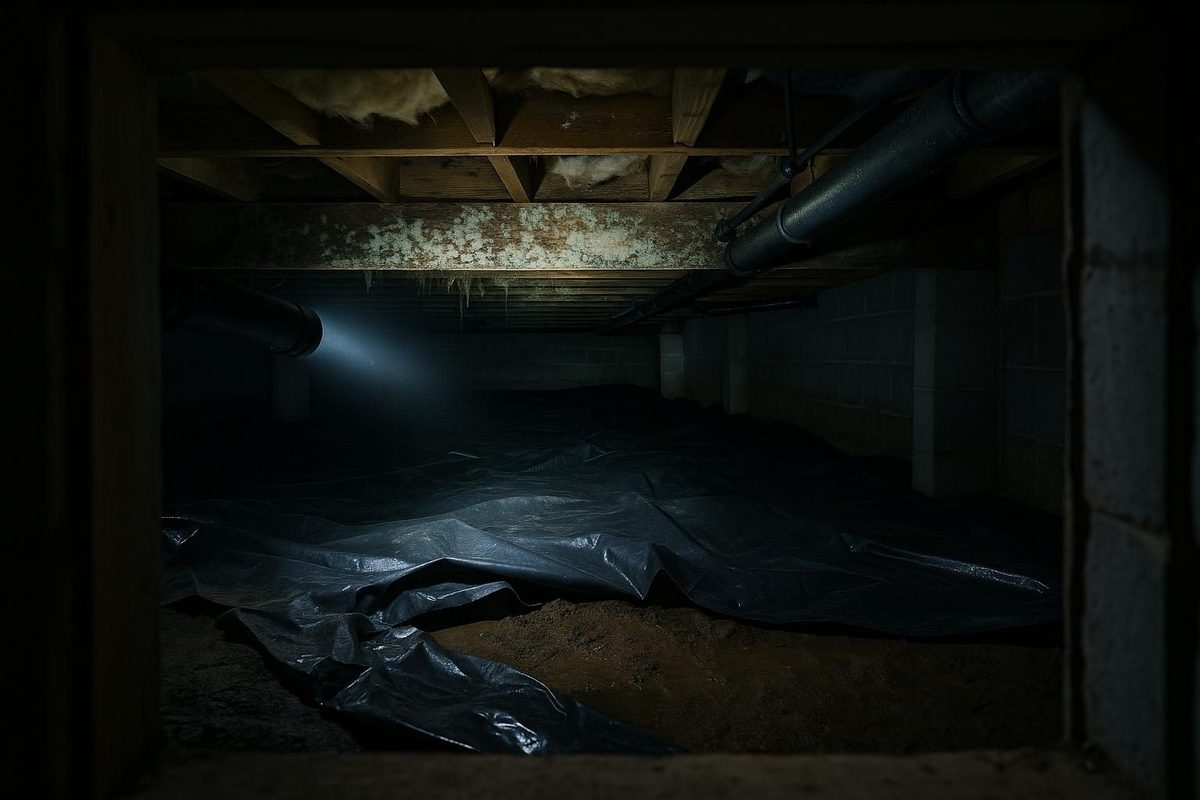
- Visible white or dark discoloration on wood surfaces when you do peek beneath
If you’ve noticed two or more of these, schedule a professional inspection before the situation worsens. Early detection keeps mold removal costs manageable.
Types of Fungus Found Beneath Homes
Not every infestation looks the same. Black varieties (Stachybotrys) tend to colonize areas with chronic water intrusion, such as near dripping pipes or where puddles form regularly. White varieties often coat structural lumber and subflooring where dampness stays elevated but no active drip exists.
Aspergillus and Penicillium are two other common species. Both release airborne particulate that travels through HVAC systems (the heating, cooling, and air conditioning network) into your living quarters. Even small colonies produce enough irritants to trigger asthma attacks or allergic reactions in sensitive individuals.
How to Inspect Your Foundation Void Safely
Wear proper personal protective equipment before entering: an N95 respirator, safety goggles with sealed edges, long sleeves, and nitrile gloves. Bring a bright flashlight and a moisture meter if you have one.
Check these areas first:
- Structural framing and rim boards for discoloration or soft spots
- Fiberglass batts for sagging, staining, or visible microbial colonies
- Exposed soil for pooling water or a shiny, damp appearance
- HVAC ducts and plumbing runs for condensation droplets
Homes with sub-floor access points often hide moisture issues behind fiberglass batts. Pull back a section near any suspected trouble spot to see what’s happening on the wood surface behind it. Regular seasonal checks catch problems before they become expensive cleanup projects.
Health and Structural Risks
Toxic exposure to certain fungal species can cause headaches, chronic coughing, skin irritation, and serious breathing problems over time. Children, older adults, and anyone with asthma face higher risk. Airborne particles travel upward through gaps in subflooring, exhaust openings, and ductwork, meaning the contamination below directly affects indoor air quality above.
Structural damage compounds the health concerns. Persistent dampness causes wood rot in floor joists and beams, weakening the supports your floors depend on. Damaged building insulation loses its R-value, driving up energy costs. Left unchecked for months, these issues can escalate to the point where foundation repair becomes necessary.
Dealing with Contamination Underneath Your Property
Small patches (under 10 square feet) on non-porous surfaces may be cleanable with a stiff brush and a solution of water and detergent. Some homeowners use diluted bleach or white vinegar, though neither penetrates porous wood effectively. Always air out the area during cleanup.
For anything larger, or if you spot dark-colored colonies, contact a professional mold remediation company. They’ll conduct a thorough assessment, take air samples, and develop a containment plan. These specialists use HEPA filtration, antimicrobial treatments, and negative air pressure to block cross-contamination during removal.
The thing most guides won’t tell you: cleaning visible colonies without fixing the moisture source guarantees the problem returns within weeks. Every treatment plan worth paying for addresses water intrusion first, contamination second.
How to Prevent Mold in Your Sub-Floor Area
Stopping fungal growth starts with controlling water. Here are the measures that deliver the best long-term results:
- Install a 12-mil or thicker vapor barrier over all exposed soil, sealed at seams and edges
- Fix plumbing drips immediately, no matter how minor they appear
- Add a ventilation fan or improve existing airflow to reduce humidity
- Place a dehumidifier rated for the square footage, keeping moisture levels below 50%
- Wrap cold-water pipes and ductwork to eliminate condensation
- Install a sump pump if the area floods or collects pooling water during heavy rain
- Regrade exterior soil so it slopes away from the foundation at 6 inches per 10 feet
Full crawl space encapsulation (sealing the entire sub-floor zone with heavy-duty polyethylene sheeting, insulated walls, and a commercial dehumidifier) is the gold standard. It’s more expensive upfront, but in humid climates it pays for itself by cutting recurring treatment bills and lowering energy costs.
Long-Term Protection for Your Home
After treatment, ongoing monitoring helps prevent mold growth from returning. Check the dehumidifier monthly and replace filters on schedule. Inspect gutters and downspouts each spring and fall. Look for new cracks in the foundation walls that could admit groundwater.
If your region gets regular rainfall or sits on clay-heavy soil, consider annual professional inspections. A trained inspector can spot early moisture intrusion that a visual check misses. Proper drainage, consistent airflow, and effective thermal barriers work together to keep the area dry and safe.
Addressing mold under house in crawl space areas early prevents expensive repairs and protects your family’s wellbeing. Don’t wait for visible damage to take action.
Frequently Asked Questions
How do I get rid of mold in crawl space areas?
Remove visible colonies using proper safety gear (N95 respirator, gloves, goggles) and an antimicrobial cleaning solution. For areas larger than 10 square feet or for toxic black varieties, hire a certified mold removal company to handle containment, treatment, and post-cleanup verification.
Is it safe to live in a home with contamination in the sub-floor area?
It depends on the extent and species involved. Small surface colonies may pose minimal risk, but widespread infestations release enough airborne irritants to cause breathing problems, allergic reactions, and worsen asthma. Get a professional assessment before assuming it’s safe.
How much does professional cleanup cost?
Costs typically range from $1,500 to $9,000, depending on the size of the affected area, the severity of water damage, and whether structural repairs are needed. Encapsulation adds $5,000 to $15,000 but provides long-term protection against future problems.
Does homeowners insurance cover crawl space mold treatment?
Most standard policies cover fungal contamination only when it results from a “covered peril” like a sudden pipe burst. Gradual moisture buildup, poor maintenance, or dampness-related issues are almost always excluded. Check your policy or call your agent to confirm.
Can contamination below the home affect indoor air quality?
Yes. The stack effect pulls air upward from the foundation void into living areas. Studies suggest up to 40% of the air you breathe on the first floor originates from beneath the home. Spores, volatile organic compounds, and musty odors all travel this path.
What humidity level should I maintain to stop recurrence?
Keep relative humidity below 50%, ideally between 30% and 45%. A properly sized dehumidifier with a built-in hygrometer makes this easy to monitor. In particularly humid climates, pairing the dehumidifier with encapsulation gives the best results.
Should I test the air before starting cleanup?
Air testing helps identify the species present and establish a baseline for post-treatment comparison. It’s not always necessary for small, visible colonies, but it’s strongly recommended when the infestation is hidden or when occupants report health symptoms related to indoor air.
