
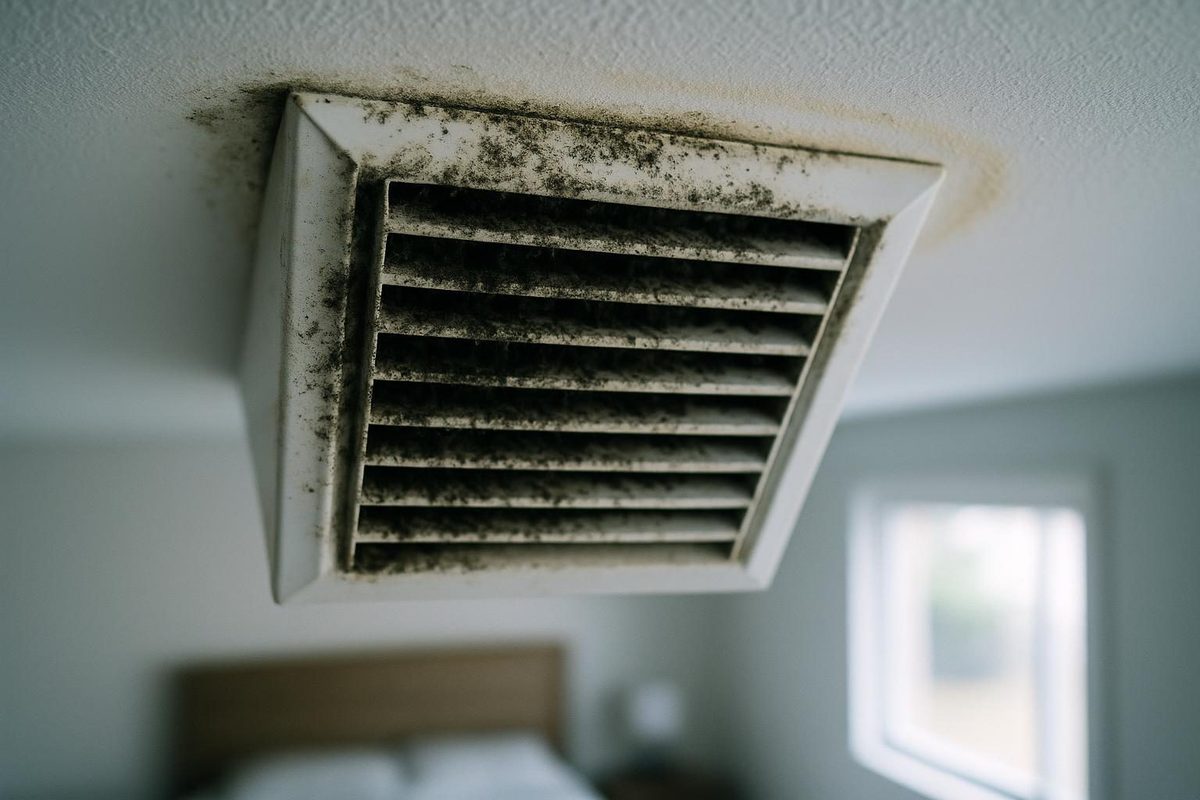
That damp smell coming from your registers isn’t just stale air. Mold in house vents is one of the most common yet overlooked problems in residential HVAC systems, and it seeds spores into every room each time the blower kicks on. Left unchecked, fungal growth inside ductwork quietly degrades indoor air quality and can trigger health symptoms you might blame on seasonal allergies. If you’ve spotted dark patches around your supply grilles or noticed a damp scent when the system runs, this guide walks you through identification, removal, and prevention so the problem doesn’t spread further.
Why Mold Grows Inside Air Duct Systems
Mold spores need three things to take hold: moisture, an organic food source, and limited airflow. Your air conditioning system, especially an older or poorly maintained one, delivers all three. Condensation forms on cold coils and drip pans, dust particles collect on interior surfaces, and dark stretches of the system sit undisturbed for months at a time.
Conditions That Lead to Mold Growth
- High humidity in warm climates where the AC runs constantly
- Dust and debris trapped inside air ducts acting as a food source
- Poor drainage from the air conditioner or a clogged condensate line
- Cooled output passing over warm surfaces, creating condensation
- Leaky ductwork that draws in outdoor moisture
Once colonies establish, they reproduce fast. Contamination travels through the handling system, settles on damp surfaces downstream, and new colonies form within 24 to 48 hours under the right humidity levels.
Common Signs of Mold in Air Vents
Contamination in your vents doesn’t always announce itself with visible patches. Many homeowners only realize something is off after recurring health complaints or a persistent change in how the home smells.
What to Watch For
- A musty smell each time the heating or air conditioning cycles on
- Visible dark growth around vent grilles and registers
- Black dust or spots that return within days of cleaning
- Allergy or asthma symptoms that worsen indoors but improve outside
- Persistent headaches, sinus pressure, or fatigue with no clear cause
- Rhinorrhea (runny nose) and itchy, watery eyes tied to time spent indoors
These are common signs of a problem inside the HVAC, particularly when they coincide with high humidity or poor circulation. If multiple people in the household report similar complaints, that musty scent deserves investigation.
What Mold Looks Like Inside Ducts
Not every dark spot is fungal, and not every fungus is black. Still, discoloration on interior duct surfaces or around AC vents warrants attention. The growth often appears as dark specks, blotchy patches, or a thin film with a slightly slimy texture. Colors range from black and dark green to gray, depending on the species involved.
Black mold, sometimes identified as Stachybotrys chartarum, can release mycotoxins into the air. Mycotoxins are volatile organic compounds produced by certain fungal species that may cause more severe reactions than ordinary contamination. Not every dark colony produces these toxins, but without laboratory testing you can’t tell the difference visually. Treat any visible contamination seriously and avoid disturbing it without protective gear (gloves, an N95 respirator, and eye protection at minimum).
Health Risks of Mold Exposure Through Ductwork
Because your heating and cooling system pushes air into every connected room, contaminated ducts turn your entire home into an exposure zone. The EPA notes that poor indoor quality from biological contaminants in HVAC ductwork is a recognized health concern.
Possible Effects of Mold Exposure
- Coughing, sneezing, and irritation of eyes and skin
- Chronic sinus infections and shortness of breath
- Worsened asthma in sensitive individuals
- Persistent fatigue, nausea, and headaches
- Respiratory disease risk in immunocompromised individuals
Children, older adults, and anyone with existing respiratory conditions face the highest risk. One mistake I see repeatedly: people assume a few dark spots on a register are cosmetic. They wipe the grille and ignore what’s deeper inside. That surface grime is often the visible edge of a colony that extends well into the ductwork.
How Mold Gets Into Your HVAC System
Moisture is the primary entry point. Condensation on evaporator coils, a clogged drain pan, or a slow leak around connections all introduce water into places that should stay dry. Dust acts as the food source, and once particles land on a wet surface, colonization begins in hours.
Both flexible ductwork and sheet metal ducts are susceptible. Flexible varieties with interior insulation are actually more vulnerable because the fibrous lining traps moisture and organic matter, creating conditions that are nearly impossible to fully clean without replacement. Zones near drip pans, cooling coils, and return plenums stay damp longer than the rest of the system, making them prime spots for colonization.
How to Check for Hidden Contamination
Start with a simple visual inspection. Remove a supply register cover and shine a flashlight inside. Look for discoloration, dark patches, or buildup that doesn’t resemble normal dust. Pay attention to the backside of the grille itself; contamination often starts there because condensation collects on the metal surface.
Smell matters too. A strong stale scent from one specific register usually points to localized mold in that branch of the duct system. If you can’t see anything but the scent persists, consider scheduling professional mold testing to confirm or rule out the issue. Sampling and surface swab tests performed by a qualified inspector provide definitive answers that visual checks alone cannot.
What to Do When You Find Mold in Your Vents
Don’t ignore it, and don’t just wipe the grille and call it done. Fungal colonies will continue spreading as long as moisture and organic material remain available. First, shut off the system to stop circulating contamination throughout your home.
Next Steps for Remediation
- Replace all filters immediately
- Clean register covers and grilles with a diluted bleach solution or commercial fungicide
- Dry every accessible surface thoroughly before reinstalling covers
- Call a certified remediation service for deeper duct cleaning
Professional duct cleaning performed by NADCA-certified technicians uses negative pressure machines and rotary brushes to remove contamination from deep inside the system. The process typically costs between $400 and $1,000 for a standard residential setup, though severe infestations may run higher.
Why DIY Mold Removal Often Backfires
Scrubbing visible contamination without sealing the area first releases a burst of spores into the living space. That actually makes the problem worse. Professional remediation teams isolate sections with plastic sheeting and negative pressure before disturbing any contaminated material. They apply antimicrobial treatments to inhibit regrowth and verify the job with post-remediation testing.
After doing this for over a decade, the thing most guides won’t tell you is that the ductwork itself sometimes needs replacement rather than cleaning. If the lining is fiberglass and contamination has penetrated the insulation layer, no amount of surface cleaning eliminates the problem. Sheet metal ducts can usually be cleaned and treated effectively; fibrous ones often cannot.
How to Prevent Mold in Air Vents
Prevention comes down to controlling moisture and maintaining the system. Regular maintenance catches early warning signs before colonies establish.
Mold Prevention Checklist
- Replace filters every 1 to 3 months, or monthly in humid climates
- Fix leaks around ductwork, the condenser unit, and condensate drain lines
- Keep drip pans clean and drain lines clear of obstructions
- Run a dehumidifier to keep indoor humidity below 50%, ideally between 30% and 45%
- Schedule annual inspections with a certified technician
- Seal gaps in ductwork to help prevent mold from developing
- Run the fan for 15 minutes after the AC cycles off to dry residual moisture
That last tip is the one most people skip. In homes with a significant shoulder season (spring and fall where it’s not cold enough for heat and not warm enough to justify AC), humid conditions build up inside idle ductwork. Running a purifier with a HEPA filter in high-moisture areas like the crawl space, basement, or bathroom helps reduce airborne contamination between system cycles.
When to Call for Professional Mold Testing
A visual check and a sniff test catch obvious problems. But hidden contamination behind drywall, inside insulated ducts, or deep in the handling unit requires professional assessment. If you notice persistent symptoms, recurring smells, or you’ve had recent water damage, a certified inspector can perform air sampling and surface testing to confirm exactly what’s growing and how far it has spread.
Testing also identifies the species, which matters for determining the remediation approach. Aspergillus and Penicillium species require different treatment than Stachybotrys. Without testing, contractors may over-treat or under-treat the issue. Mold in house vents is rarely a single-species problem; most infestations involve multiple organisms, and a proper lab report guides the cleanup strategy.
Frequently Asked Questions
Is mold in air vents harmful?
Yes. Spores circulated by the heating and cooling system can cause respiratory irritation, allergic reactions, headaches, and chronic sinus issues. People with asthma, allergies, or compromised immune systems face higher risk from prolonged exposure.
What should I do if I find growth in my vents?
Shut off the system, replace filters, and clean accessible vent covers with a fungicidal solution. For contamination inside the ductwork, hire a NADCA-certified professional rather than attempting deep cleaning yourself.
How can I tell if it’s fungal growth or just dust?
Fungal colonies typically appear as blotchy, irregular patches that feel damp or slightly slimy. Ordinary dust is dry and wipes away cleanly. A persistent stale smell and stains that return after cleaning point to biological growth rather than simple dirt buildup.
Can I handle vent cleaning myself?
Surface-level spots on register covers can be cleaned with a diluted bleach solution and a stiff brush. For anything deeper than what you can see and reach by hand, hire a professional. Disturbing colonies without proper containment worsens the problem.
How do I prevent it from coming back?
Change filters regularly, maintain humidity below 50%, fix any leaks promptly, and schedule yearly inspections. Running the blower fan briefly after AC cycles off helps dry residual condensation in the duct system.
Can contamination in ducts affect the whole house?
Absolutely. The duct system connects every room with supply and return registers. Contamination in one section travels throughout your home each time the blower activates, potentially causing smells and symptoms in rooms far from the original source.
What causes growth to develop inside vents?
Moisture from condensation, clogged drain lines, or leaks combines with dust and organic debris to create ideal growing conditions. Poor ventilation and infrequent filter changes accelerate the process.
How fast does it spread in ductwork?
Under favorable conditions (warm temperatures, humidity above 60%, organic food source), colonies can double in size within 24 to 48 hours. High humidity and infrequent system use during shoulder seasons create especially rapid spreading conditions.
